There are many resources on the
Pythagorean Theorem. There are many on the history and even more on the proof
of the theorem. However I will be focusing, just like in my last visualization
post, on the Pythagorean Theorem in popular culture.
Text #1 (print)
Bibliography
Information:
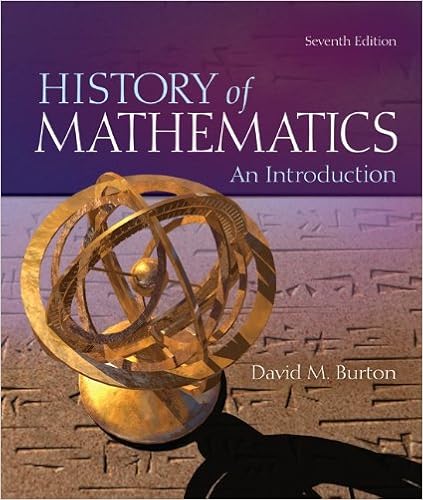
Burtun, David M. "The
Pythagorean Problem." The History of Mathematics: An Introduction 7th edition. New
York: Mcgraw-Hill, 2011. N. pg 105. Print.
Summary:
In the section, The Pythagorean
Problem, the book discussed the history of the Pythagorean Theorem and how the
Babylonians knew the result for certain right triangle at least a millennium
prior to Pythagoras. It also tells the reader that none of the various Greek
writers who attributed the theorem to Pythagoras lived within five centuries of
him. So the origins of the theorem is pretty lost in history, just like the
legend that Pythagoras sacrificed 100 oxen to the Muses in gratification.
Text Complexity:
Quantitative Measures:
|
Reading
Level
|
Grade
Level
|
|
Flesch
|
18.1
|
|
Readability Index
|
21.2
|
|
Reading Ease
|
30.5/100
|
|
SMOG Index
|
17.1
|
|
Average Level
|
18.4
|
According to Storytoolz.com, The
History of Mathematics: An Introduction is a college level reading. I agree
with this. It’s actually a college text book. The language featured in the text
is very complex. It is not an easy read. For example the opening sentence,
"Although tradition is unanimous in ascribing the so-called Pythagorean
theorem to the great teacher himself, we have seen that the Babylonians knew
the result for certain specific triangles at least a millennium earlier."
The language is very dry and unappealing. The text structure of the passage
consists of long drawn out paragraphs discussing the history, with assumptions
of prior knowledge, that lead into diagrams. This structure while moderately
complex has a high knowledge demand. The text requires some knowledge of the
theorem itself as well as knowledge of deciphering diagrams and graphs.
Purpose:
A purpose for using this text would
be research. I would not use this text to introduce a topic. It is complex as
well as uninteresting to most, except for maybe history or math buffs. I would
use this text for research purposes, or to build on the history of Pythagoras
and "his" so-called theorem.
Question
for Students:
A question for students to consider
when interacting with the text would be: how does this information on the
history of theorem differ from your prior knowledge? Why do you think this is
so?
Text #2
(print)

Bibliography
Information:
O'Connor, J.J and E.F. Robertson.
"Pythagoras's Theorem in Babylonian Mathematics." Babylonian Index History Topics. JOC/EFR, Dec. 2000. Web 21, July 2015.
Summary:
This article examines four
Babylonian tablets that have connections to Pythagoras's Theorem. All four
tablets discuss the common triples we know today, i.e. the 3,4,5 triangle.
Text Complexity:
Quantitative Measures:
|
Reading Level
|
Grade Level
|
|
Readability
Index
|
11.3
|
|
Reading
Ease
|
66.0/100
|
|
Average
Level
|
11.4
|
According to storytoolz.com the
grade level for this text is 11th. I disagree. I think it’s a senior
in high school or a college student. While the text is easier to read to read
than the previous text, significantly smaller more common words. The knowledge
demand is highly complex. The article goes into mathematical proofs of the
Pythagorean Theorem based on the Babylonian tablets. So there is high math
knowledge demand. The text structure is also complex. There are a lot of
pictures and mathematical equations that may make the text structure more
complex to read.
Purpose:
The purpose of this text would be
also be research. I would use this text as an extra resource for investigating
the Pythagorean Theorem and/or the Babylonians. This text would be useful to
build background knowledge on either one of those topics.
Question for students:
Has this helped clarify the Theorem
for you? Do you think the Babylonians came up with the theorem prior to Pythagoras?
Text #3 (print)
Bibliography
Information:
Pythagorean Theorem Wikipedia.
Wikipedia Foundation. Web. 21, July 2015.
Summary:
The Pythagorean Theorem Wikipedia
page has the history of the as well as many proofs of the theorem. However I
focused on the pop culture section. This section informed the reader of
different points in history where the Pythagorean Theorem was integrated into
pop culture. It tells us about a Hans Christian Anderson poem that has a verse
about the theorem. It also tells us about the scene in The Wizard of Oz where
the scarecrow states the theorem incorrectly. As well as a book released in
2008 about aliens whose space ship has the theorem written on it.
Text
Complexity:
|
Reading Level
|
Grade Level
|
|
Readability
Index
|
9.3
|
|
Reading
Ease
|
57.6/100
|
|
SMOG
Index
|
11.8
|
|
Average
|
10.9
|
According
to Storytoolz.com the grade level for this theorem is 10th. I do not
agree with this. I’d say 7th or 8th. Whenever students are
introduced to the Pythagorean Theorem. The text structure is not very complex. In
fact it’s a list, bullet pointed in order of history. The only prior knowledge
really needed for this section of the page would be the Pythagorean Theorem
itself. The language used in this section is very straight forward and to the
point. I don’t see much complexity at all in the language used. It states the
year, how the Pythagorean Theorem was used in popular culture and by whom.
Purpose:
I’d
use this text as reading for background knowledge on the Pythagorean Theorem.
It sheds a new light on such a stale subject. This text could be used for
research as well, depending on the topic. I’d use this to summarize previously
learned concepts
Questions for Students:
How
have you seen either the Pythagorean Theorem or other math concepts in popular culture?
Why do you think this theorem in particular has been integrated into main
stream?
Text #4 (digital)
Bibliography Information:
Vi
Hart. “What Was Up With Pythagoras?” YouTube. Standard YouTube License. 12,
June 2012.
Web. 21, July 2015.
Summary:
This
text is a digital storytelling in the form of a YouTube video. The creator
talks about the myths and legends of Pythagoras. How he may or may not have
been a murder. How he hated beans. How he may have sacrificed oxen to the Gods.
How he had a cult of Pythagoreans “the cool kids club.” Along with some proofs
of the theorem and a timeline about numbers.
Text Complexity:
|
Reading Level
|
Grade Level
|
|
Readability
Index
|
6.4
|
|
Reading
Ease
|
79.4/100
|
|
SMOG
Index
|
8.7
|
|
Average
|
7.5
|
I
don’t agree with the above grade levels. I think its high school level. I’d say
no earlier than 9th grade. Not because it’s hard to understand; she
does an amazing job on explaining everything thoroughly, but because of
content. The story about Pythagoras that’s being told is about him possibly
being a murder and have a cult of followers. I don’t think that’s appropriate
for middle schoolers. With that being said the complexity of this text isn’t
very demanding. You need moderately complex background knowledge; like who
Pythagoras was and the theorem he came up with. Even though she does a good job
explaining, without prior knowledge you’d pretty lost, especially with how fast
she runs through the information. The text structure is very complex. She
quickly goes through the information, demonstrating the concepts through
drawing. However you have to pay close attention if this is your first time being
exposed to this information. The language features aren’t very complex. She’s
easy to follow, as long as you can keep up. She doesn’t use excruciatingly big
words. She definitely brakes it down to a more common level.
Purpose:
I’d
say this is informational. I’d use this to build on previous knowledge of
Pythagoras and his theorem. I would not use this as introductory text. I’d use
this as a fresh look at the Pythagorean Theorem and its founder. I’d also use
this to motivate interest. She did an amazing job on making the subject
interesting and leaving the audience wanting to know more.
Question for Students:
How
does this change your understanding of Pythagoras? Can you make your own digital
storytelling video on a subject?
Text #5 (digital)
Bibliography Information:
MathWizard1.
“Scarecrow Doesn’t Get a Brain After All.” YouTube. Standard YouTube License.
21, Nov. 2007. Web. 21, July 2015.
Summary:
This
is a clip of the movie The Wizard of Oz (1939). In this scene the wizard gives
the scarecrow a diploma and the scarecrow “magically” gets a brain. However the
scarecrow says, “The sum of the square roots of any two sides of an isosceles triangle
is equal to the square root of the remaining side, oh joy, oh rapture, I’ve got
a brain.” This is an incorrect attempt
at repeating the Pythagorean Theorem.
Text Complexity:
|
Reading Level
|
Grade Level
|
|
Readability
Index
|
3.6
|
|
Reading
Ease
|
85.6/100
|
|
SMOG
Index
|
7.9
|
|
Average
|
5.7
|
I do
not agree with the above. The language featured in this clip is very complex. You
would need background knowledge on isosceles triangles, but the wizard states, “Therefore,
by virtue of the authority vested in me by the Universitatus Committeeatum e
plurbis unum, I hereby confer upon you the honorary degree of Th.D.” (http://wendyswizardofoz.com/printablescript.htm)
I don’t even know what plurbis unum is. I would say that the level of this text
would be 10th grade.
Purpose:
The
purpose of this clip would be informational, or critiquing. I’d use this to
demonstrate misconception of theorem. As well as to motivate interest if I were
to show the entire movie.
Questions for Students:
What misconceptions have you had or heard about the
theorem? Would have caught this mistake or recognized it at the Pythagorean Theorem
if it were not pointed out?
Text #6 (Culturally
relevant ~ digital)
Bibliography Information:
The Best Pythagorean Theorem Rap
Ever. Prod. Jake “2pi” Scott. By Ernesto Lara. Perf. Jake “2pi" Scott. YouTube. Standard YouTube License. 24, Aug. 2012. Web. 21, July 2015.
Summary:
The
music video is about the Pythagorean Theorem. He tells his audience how to use
the theorem through his lyrics. This culturally relevant because in the video
he shows how to use the theorem in a classroom and is an African American
gentleman.
Text Complexity:
|
Reading Level
|
Grade Level
|
|
Readability
Index
|
1.6
|
|
Reading
Ease
|
92.6/100
|
|
SMOG
Index
|
6.9
|
|
Average
|
4.2
|
I do
not agree with the above. I’d say 8th grade is the right level for
this video. While he’s easy to understand and brakes everything down, the content
is a higher level. You’d already need to know of the Pythagorean Theorem to get
the most out of this music video. The structure isn’t every complex. The rap
isn’t very fast, it’s very smooth and informative. It goes slow enough to
understand what’s going on without going too slow where it’s boring.
Purpose:
The
purpose of this video would be to reinforce the concept. I’d use this after
introducing the Pythagorean Theorem to generate interest as well as to give
another perspective on the theorem. This video could possibly help kids who are
struggling to understand the concept.
Question for Students:
I’d
ask my students to come up with their own song for different math concepts, in
order to shed new light on old ideas. I’d also ask them; how they think this
would help someone struggling to understand the theorem?

It looks you found some nice texts that students would be able to remember the pythagorean theorem! I think the rap video for sure would help students remember the theorem pretty well and the steps on how to use the theorem. I think the other print sources are nice resources for you and your students to use to look up the background and it may be helpful for your students to use to even potentially create their own pop culture references to the pythagorean theorem on their own.
ReplyDeleteThis comment has been removed by the author.
ReplyDeleteI love the hip hop video! A very nice addition to the collection.
ReplyDeleteVery nice text set. I love all how diverse your text set is. The rap video is an awesome touch because I feel it would help students remember the Pythagorean Theorem. I feel you could use all these text sets in a classroom, even the Wizard of Oz clip by using it as everyone makes mistakes.
ReplyDelete